


The Scars of Peace in the House of Fear: A Sermon for Easter 2, 2026

When Our Defenses Become Our Prison
There is an old story about a man who was paralyzed by a singular, recurring fear: he was convinced there were monsters living under his bed. Every week, his therapist would ask, "Have you made any progress?" and every week the man would sigh, "No, Doctor, the monsters are still there."
Then, for a few months, the man stopped coming. When he finally bumped into his old therapist on the street, he looked like a new person—bright-eyed and confident. The man beamed, "I’m feeling all better now. I went to another doctor and he cured me in one session. He just told me to cut the legs off my bed."
It’s a funny story, but it touches on a profound truth: fear makes us do and think crazy things. It drives us to construct elaborate, often absurd systems of defense that end up imprisoning us.

Take the case of Donald Manison, who lived in his 1998 Dodge Caravan because he was too afraid to disturb the "perfection" of his own home. He wouldn't even walk on his carpet for fear of disturbing the thread. We might laugh, but how many of us are living in the spiritual equivalent of a Dodge Caravan? How many of us have built lives so walled-off from risk or the "mess" of other people’s needs that we are no longer actually living in our own lives?
The Anatomy of the Locked Room
Living in fear has consequences. It keeps us from authentic relationships. The theologian Henri Nouwen noted that as soon as our safety is threatened, we grab the first "stick or gun" available—power, money, influence, or even a hidden memory used to manipulate. We grab these things to stay in control, and before we realize it, we have pushed our friends—and our God—away.
In the Gospel of John, we find the disciples in a "House of Fear." The doors were locked. They were gripped by suspicion, grief, and the fear of authority. Their community was beginning to rot from the inside out.
The Sacred Defiance of Humour
But sometimes, the only way to survive the "monsters" is to laugh at the absurdity of the bed legs. Humour is a "sacred defiance" against the power of fear. It provides us with "psychological distance," making our problems seem less insurmountable.
When we laugh at our own "sticks and guns," we practice humility. Humour reminds us that we are not the center of the universe and that we are ultimately dependent on a God who is much bigger than our anxieties.
Doubt as an Invitation
Into this house of fear walks the resurrected Christ. He doesn't knock; he simply appears and says, “Peace be with you.”
Then we have Thomas. We often call him "Doubting Thomas," but he is actually a hero of intellectual honesty. He refused a "second-hand" faith. In progressive theology, we see that the opposite of faith is not doubt, but certainty. Certainty locks doors; doubt searches for the key. Jesus doesn't shame Thomas; he meets him exactly where he is.
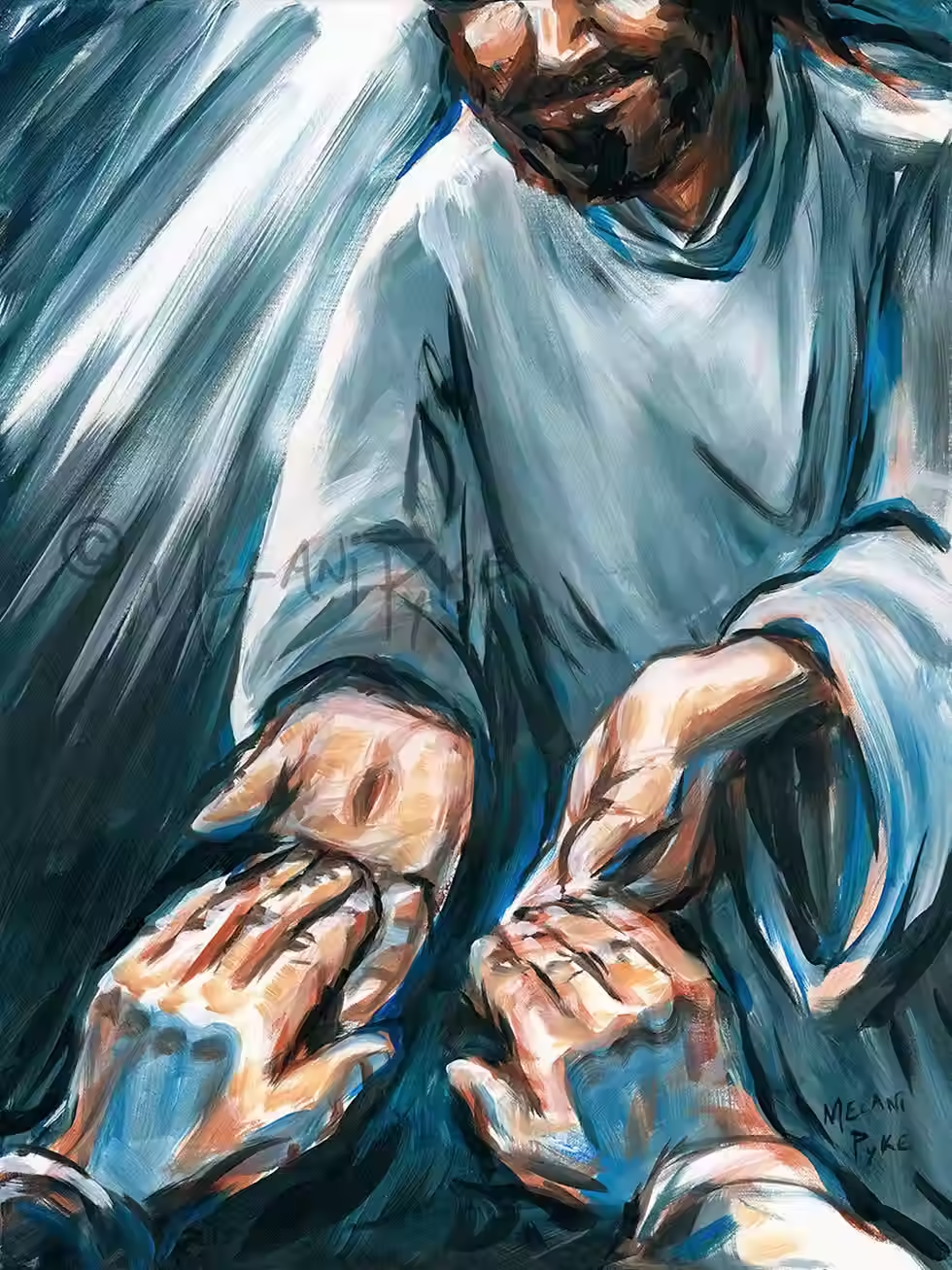
The Liberation of the Wounds
Thomas’s demand to touch the wounds is also an act of solidarity. A Jesus without scars would be a fraud. A leader who didn't carry the marks of suffering couldn't truly stand with the oppressed.
To find Christ today, we must do what Thomas did: reach out and touch the wounds. We find the Risen Christ in the "crucified peoples" of our world—the homeless, the hungry, and the marginalized. We cannot have a relationship with the Risen Christ if we are unwilling to touch the wounds of the world.
Moving Toward Shalom
When Jesus breathes on the disciples, he gives them Shalom—wholeness. In the Scriptures, "death" is any power that diminishes life: hunger, despair, greed, or anxiety.
The promise of the Gospel is that Jesus cannot be stopped by our locked doors. He comes into our pain and breathes the Holy Spirit into us—not so we can stay comfortable, but so we can become agents of his peace.
Conclusion: Are You Ready to Walk on the Carpet?
Are there any locked rooms in your heart today? Are there "monsters under the bed" that have you living in a spiritual minivan? Take a deep breath. Let out a small, defiant laugh at those monsters. Then, hear Christ’s words for you: Peace be with you.
He is here, showing you his wounds so that you may be healed. He is calling you out of your safe, locked room and into a world that desperately needs his gifts of life. Let us go out as those who—like Thomas—have touched the wounds of the world and found that God was there all along.
Amen.


Comments